
Most of us have a few clothes that just work, and a few that never quite feel right, even though we can't say why. Very often, the difference comes down to colour. Here are some of the most common signs that the colours you're wearing might not be doing you any favours.
1. People ask if you're tired
You've slept well and you feel fine, yet someone asks if you've had a big week. If this happens more often in certain tops, colour could be part of the reason. Colours that don't suit your natural colouring can make shadows under the eyes look deeper and the face look less fresh.
2. Your makeup is working overtime
If you find yourself reaching for more concealer, more blush or a stronger lipstick to feel "finished" in certain outfits, the clothes may be pulling colour away from your face. When the colours near your face harmonise with you, makeup often has less work to do. Not wearing makeup? The same idea applies. You might notice you look healthier and more rested in some colours than others.
3. A full wardrobe, but nothing to wear
A wardrobe full of clothes that don't go together is a classic sign. Pieces bought on impulse or because a colour was in fashion (or on sale 😂), often sit unworn, because they don't suit you or don't combine with anything else you own. When most of your clothes come from colours that suit you, more of them tend to work together.
4. Some tops always get compliments
This is a good sign, and a useful clue. If one shirt or jumper reliably gets comments like "you look well", take note of its colour. Is it light or deep? Soft or vivid? Warm or cool? Your favourites can hint at the colours that suit you best.
5. You avoid photos in certain outfits
If you look at photos and think you look washed out or not quite yourself, check what you were wearing. Colours close to the face show up clearly on camera, for better or worse.
6. People notice the outfit before they notice you
If the first comment is "what a bright top" rather than "you look great", the colour may be overpowering you. Very bold or very dark shades can dominate people with softer or lighter colouring, while very soft shades can leave people with stronger colouring looking a little flat.
What the wrong colours can do
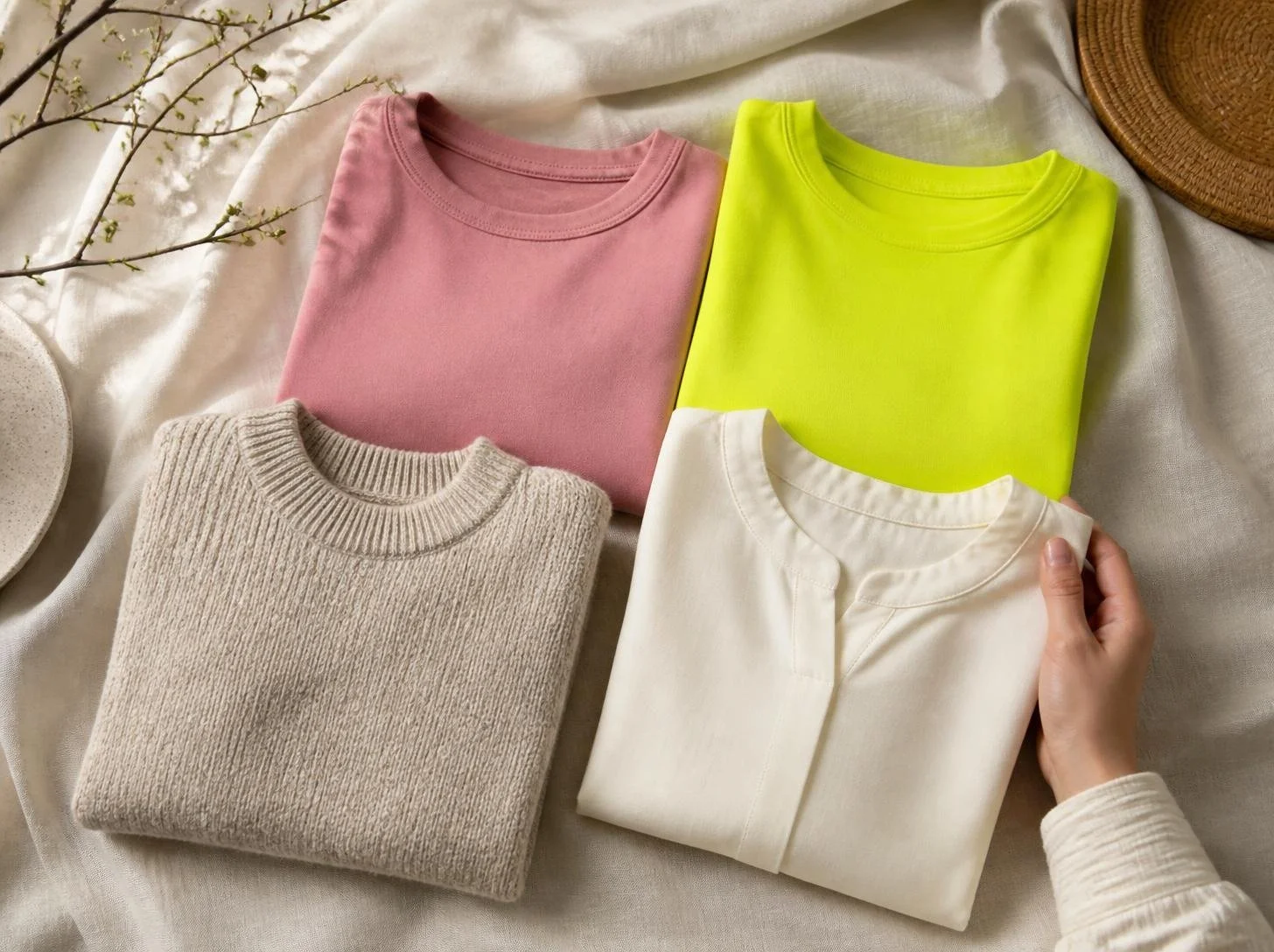
Colour analysis is built on a simple observation. Colours placed near your face change the way your skin, eyes and features read. In general terms, colours that don't harmonise with you can:
Make skin look sallow or uneven. Some shades can bring out a yellowish or greyish cast, or make redness and uneven patches more noticeable.
Emphasise shadows. Dark circles, lines and the shadows around the nose and mouth can look more pronounced.
Overpower you. A colour that's too strong, too dark or too bright for your colouring can take centre stage, so the eye goes to the garment first.
Wash you out. A colour that's too pale or too soft for your colouring can leave you looking faded.
Colours that suit you tend to do the opposite. Skin looks clearer and more even, eyes look brighter, and you tend to look like yourself at your best, without the colour shouting over you.
Easy things to try at home
You don't need special equipment to start noticing these effects.
Use natural daylight. Stand near a window, facing the light but out of direct sunlight, without makeup if you can.
Hold tops under your chin. Compare two at a time, and look at your face rather than the garment.
Compare favourites with the unworn. Lay out the clothes you love and the ones you never wear. Do you notice a pattern?
Take a quick photo. Keep the lighting the same and compare the shots side by side. Phone cameras adjust colour automatically, so treat this as a casual check.
These are useful observations, but a home mirror and everyday lighting can only tell you so much. For the colour principles behind all of this, the ‘What is Colour Analysis’ page explains them.
When to get your colours done
If several of these signs sound familiar, a colour analysis session can take out the guesswork. Maureen, who spent more than 15 years as a L'Oréal Colour Specialist, uses a full 16-season drape set and professional lighting to create the best possible light in the circumstances, so you can see the difference clearly for yourself, in her Hillarys studio or at home anywhere in Perth's Northern Suburbs.
You can read what’s included in a one-on-one session on the individual colour analysis page.
If this all sounds a little too familiar, you can book a session and find out which colours really bring out your best.